Internet Security and Scam Awareness
Customer Support Verification Tools for Checking Official Domains, Phone Numbers, and Scam Reports
A customer support page can look convincing without belonging to the company it claims to represent. Search results, advertisements, copied logos, HTTPS certificates, familiar telephone prefixes, and even accurate company addresses can all appear on impersonation pages.
The safest way to identify an official support channel is to build a chain of matching evidence. The domain should connect back to the company’s established website, the telephone number should appear in independently controlled company channels, the app-store developer information should point to the same organization, and any payment request should match independently verifiable business information.
No single verification tool is strong enough on its own. Domain registration records can be hidden for legitimate privacy reasons. Caller ID can be spoofed. A valid TLS certificate can be issued after proving control of a domain without proving that the operator is the well-known company named on the page. Even an advertisement can be purchased by an unrelated business. The practical goal is therefore consistency across several independent sources.
Official Domain and Contact Information Consistency
The company’s own digital properties provide the best starting point.
Instead of beginning with a search for “[brand] customer service number,” open a known company homepage, official application, previous account statement, or bookmarked service page. From there, navigate internally to the customer center or contact page.
Three areas should be compared:
- customer service or help-center information
- company or legal information
- official mobile application information
The domain and company identity should remain consistent across these locations.
For example, if a company’s main website uses company.com, its support center may legitimately use help.company.com or company.com/support. A completely separate domain such as company-customer-help.com requires additional verification even if the page uses the correct branding.
The mobile application offers another useful cross-check. Google Play allows developers to publish contact details such as a website, email address, and telephone number on an application’s store listing, and Google requires developer accounts to maintain verified contact information. Apple similarly displays the developer name associated with an application on App Store product pages.
If the support website found through search uses one domain while the company’s official application lists another support website and another telephone number, the discrepancy should be resolved before providing account information or making a payment.
The legal company name matters as well. Consumer brands often operate under names that differ from the corporation processing payments or providing support. A different legal name is not automatically suspicious, but the relationship should be traceable through the company’s official terms, privacy policy, company-information page, or business registration.

Domain Registration and Certificate Evidence
Domain lookup tools are useful, but their results are often misunderstood. Registration data can reveal information such as the registrar, registration dates, nameservers, and sometimes registrant details. A domain registered only recently may justify additional checks when it claims to represent a company that has operated for decades. It is not sufficient evidence of fraud by itself.
Companies change domains, launch regional sites, replace infrastructure, acquire other businesses, and move services between subsidiaries. A newly registered domain can therefore be legitimate if the established company website clearly links to it. Missing registrant names are also weak evidence. ICANN’s registration-data framework has evolved alongside privacy requirements, and registration information can be restricted or replaced by privacy-service information. A domain should not be classified as fraudulent simply because the owner’s personal name is unavailable in a registration lookup.
TLS certificates require similar caution. The padlock and HTTPS connection indicate that communication between the browser and the website can be encrypted when the certificate is valid. They do not automatically establish that the website belongs to the brand displayed on the page.
Let’s Encrypt explains that its Domain Validation certificates verify control over a domain rather than the identity of the requesting organization. Organization Validation and Extended Validation certificates can involve additional organizational checks, but certificate information should still be treated as supporting evidence rather than a replacement for checking the company’s official channels.
The strongest interpretation is therefore:
Valid HTTPS + established domain + matching official company references = useful combined evidence.
Valid HTTPS alone = insufficient evidence of company identity.
Telephone Number Reports and Scam Databases
Telephone-number searches can expose patterns that are difficult to see from a company website alone. When a support number appears unfamiliar, search it in more than one source. Useful results can include reports of impersonation, phishing, unauthorized payment requests, technical-support scams, aggressive sales calls, or ordinary spam.
The report type matters. Ten complaints describing unsolicited marketing are different from ten reports stating that callers impersonated a bank and requested account-transfer codes. Read the description of the reported behavior rather than relying only on a red warning label.
Report timing also matters. A cluster of similar complaints during the previous several days is more relevant than an isolated complaint submitted years earlier, particularly if all recent reports describe the same impersonation method. Repetition can strengthen the signal, but the database’s counting rules must be understood.
South Korea’s National Police Agency, for example, provides a cyber-fraud history lookup. Its current service explains that the result compares the searched information with numbers reported at least three times through the cybercrime reporting system during the previous three months. The police also explicitly warn that the absence of a displayed report history does not mean fraud is impossible. This is an important limitation. A new scam number may not yet meet a reporting threshold.
The reverse problem also exists: a real business number can appear in complaints because caller ID can be spoofed. The U.S. Federal Trade Commission warns that scammers can make another organization or local telephone number appear as the caller ID. A reported number should therefore trigger investigation, not an automatic conclusion.
Another source of error is the company name. Several unrelated businesses can legally use similar trading names. A phone-search result for “ABC Service” cannot establish that the report refers to the exact corporation you are dealing with. Match the telephone number against the legal business name, address, official domain, and business registration identifier whenever those details are available.

Search Advertisements and Final Destination Domains
Search advertisements require a different type of verification because the text visible in the search result is not the final evidence that matters. Google distinguishes between an advertisement’s display URL and its final URL. The final URL is the landing page a user reaches after clicking the advertisement. For the user, the practical check occurs after navigation: inspect the actual address shown in the browser.
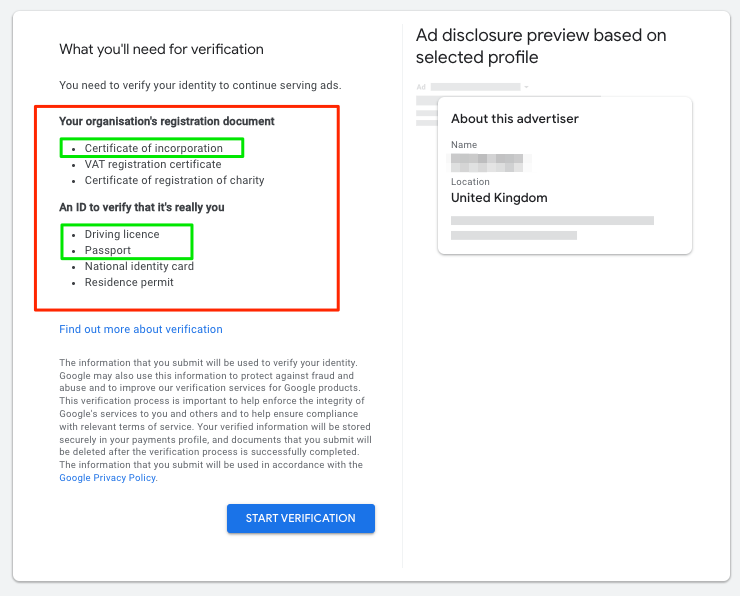
Do not judge the page by the company name appearing in the advertising headline. Google’s advertiser verification program can provide additional information about the advertiser, including information surfaced through advertising disclosures and the Ads Transparency Center. citeturn435042search3 This is useful supporting evidence, but the destination domain still needs to be checked against the company’s own official properties.
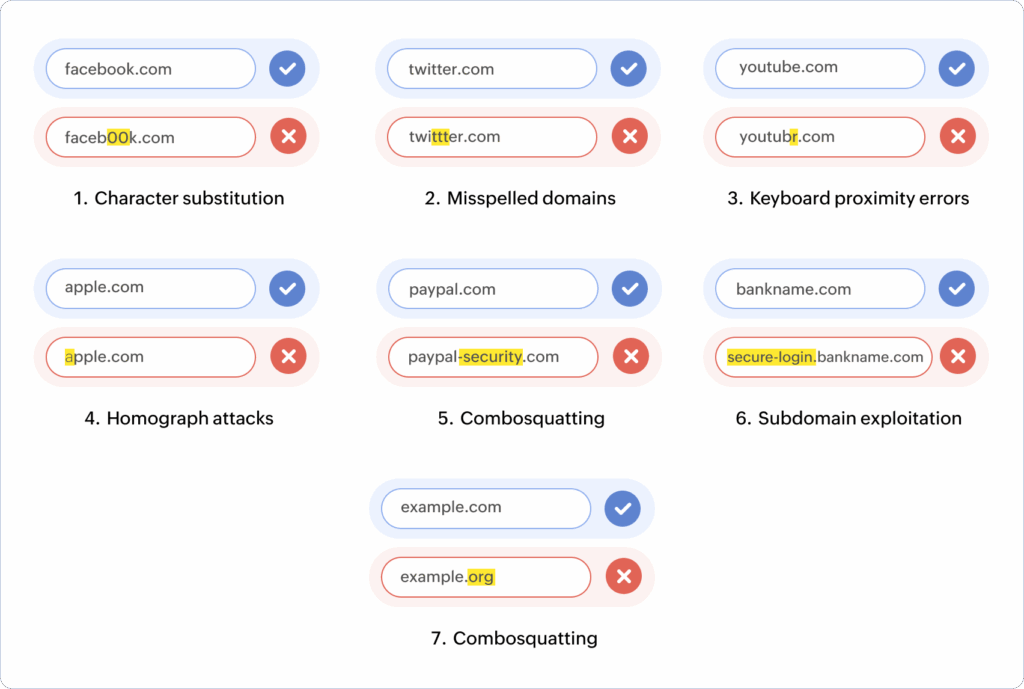
The FTC specifically warns that tech-support scammers may use online advertisements or manipulate search visibility so that people searching for legitimate technical assistance reach fraudulent support websites. Several address patterns deserve closer examination. A spelling variation changes one or two characters:
company.comcornpany.com
A keyword-extension domain adds official-looking words:
company-support-center.com
A misleading subdomain places the real brand name before a domain controlled by somebody else:
company.support-example.com
In this case, support-example.com is the controlling registered domain. The word company is merely a subdomain.
Shortened links create another verification problem because the final destination is hidden until the redirect is resolved. Support links distributed through advertisements, SMS messages, social-media messages, or unfamiliar emails should not be trusted merely because the visible shortened address looks common.
The browser’s final address bar is more important than the advertising headline, button text, QR code caption, or message preview.
Business Identity and Payment Verification
Website verification becomes more important once a support interaction involves payment.
Before paying an invoice, service fee, refund charge, reservation amount, or account-recovery fee, compare the recipient with at least two sources that were not provided by the support representative.
One source can be the company’s official application or logged-in customer account. Another can be a government business registry, existing card statement, previous verified invoice, or merchant information obtained through the payment provider.
In South Korea, the National Tax Service’s HomeTax service provides business-status searches based on business registration numbers. The Fair Trade Commission also maintains information on registered mail-order businesses, including business information that consumers can use for identity comparison.
The name shown on a card statement can be useful as well, although it may display a legal entity, payment processor, franchise operator, or abbreviated merchant name rather than the public-facing brand.
The goal is not exact visual matching of every word. The goal is a traceable relationship.
Suppose a customer believes they are paying “Example Travel,” but the checkout page lists “XYZ Holdings Co., Ltd.” Before continuing, the user should determine from Example Travel’s official company information whether XYZ Holdings actually operates the service.
A support representative’s own explanation is not an independent source.
The same rule applies to bank transfers. If a representative found through a search result provides a bank account that cannot be confirmed through the official website or logged-in account, payment should be delayed until the company confirms it through a separately obtained channel.

Multi-Source Verification Before Sensitive Actions
A reliable verification process uses independent sources in a specific order.
Start with a known company property rather than the suspicious page. Open the official application, manually enter the established domain, or use a previous statement.
Find the support telephone number or help-center address there.
Compare that information with the application’s official store listing. If both sources identify the same domain or contact details, confidence increases.
For an unfamiliar domain, examine registration history and certificate information as secondary evidence. Do not reject the domain solely because registration information is private or because the domain was changed recently.
Search the telephone number in relevant fraud-report services. Pay attention to the type, date, and repetition of complaints, while remembering that caller-ID spoofing and recycled numbers can create false associations.
For search advertisements, inspect the final browser domain instead of relying on the displayed advertisement address.
Before money changes hands, introduce another independent source: a government business register, verified account portal, existing card-company merchant information, or previous legitimate transaction record.
A practical evidence table looks like this:
| Verification Source | Stronger Signal | Limitation |
|---|---|---|
| Official company website | Support details linked internally | A compromised site remains theoretically possible |
| Official app listing | Matching developer and support details | Subsidiaries may use different names |
| Domain registration | Consistent history and infrastructure | Privacy protection can hide ownership |
| TLS certificate | Valid encrypted connection | DV certificates do not prove brand identity |
| Phone report database | Repeated recent reports with matching scam behavior | Spoofing and new numbers limit reliability |
| Search-ad disclosure | Identifies advertising entity | Advertiser identity alone does not prove support authorization |
| Business registry | Confirms legal business identity | Trading name may differ from legal name |
| Previous card statement | Shows established merchant relationship | Merchant descriptors may be abbreviated |
No row should be treated as a standalone verdict.
Impersonation Indicators During Customer Support Contact
Verification should continue after contact begins. An apparently legitimate page becomes more concerning when the support process introduces information that cannot be confirmed elsewhere. Examples include a new telephone number supplied only through chat, a payment destination unrelated to the company, or a second website described as a “special verification portal.”
Requests for passwords, one-time authentication codes, cryptocurrency transfers, gift cards, or unexpected remote-control access should receive particular scrutiny. The FTC notes that technical-support scammers commonly seek remote access to computers and then claim to find problems that require payment. Urgency is another useful contextual signal. A legitimate billing problem can have a deadline, but pressure to pay immediately before independent verification should not override the verification process.
If phishing, smishing, false caller identification, or a suspicious website is discovered in Korea, KISA’s 118 service provides consultation and reporting guidance for areas including phishing sites, smishing, false caller-number display, hacking, and spam. The safest customer-support verification method is therefore not a single website checker. It is agreement among independently controlled records.
An official support domain should connect logically to the company’s established domain and app. The telephone number should match information published by the company or withstand fraud-report checks. Registration data and certificates should support the picture without being given more weight than they deserve. Advertisement destinations should be evaluated using the final domain, and payment recipients should be verified against business and transaction records before funds are transferred.
When those pieces agree, the support channel becomes much easier to trust. When they conflict, the discrepancy itself is the reason to stop and obtain confirmation through a channel that did not originate from the questionable search result.