Animation Sites and Comic Characters
Where to Check Production Information and Broadcast Records After an Anime’s Official Website Has Closed

 0
0
 0
0
When an anime’s official website disappears, do not try to replace it with one convenient database. Production credits, original broadcast dates, Korean release information, and current streaming metadata are different records and may come from different sources.
The practical approach is to answer two questions separately:
Who produced the exact version of the anime?
When and where was that version originally broadcast or released?
Confirm the Exact Work and Version First
Before collecting staff names or broadcast dates, identify the exact work. Record:
- Original Japanese title
- Release year
- Format: television series, film, OVA, ONA, or special
- Season, cour, or part
- Episode number when relevant
- Original broadcaster or distributor, if already known
This prevents confusion between a television season, compilation film, remastered edition, rebroadcast, and international streaming release.
Search with the Japanese title first. Korean and English titles may have changed between distributors or seasons. When several works share a franchise name, add the year, subtitle, season, or episode number.
Recover Production Credits From the Strongest Surviving Evidence
Start with archived copies of the official website
Enter the old domain or page URL into the Wayback Machine and check snapshots from the anime’s original promotional and broadcast period. Look specifically for pages labelled:
- Staff and cast
- On air or broadcast
- Story or episode
- Music
- Blu-ray/DVD
- News
- Company or production committee
The Wayback Machine supports searches by URL and date, and archived URLs can be referenced in articles. However, a missing page does not prove that the information never existed. Websites may be absent because they were inaccessible to crawlers, blocked by robots.txt, protected by passwords, or heavily dependent on JavaScript. Images and internal links may also be incomplete.
Check several snapshots rather than only the final capture. Early pages may list an initial cast or broadcast plan, while later snapshots may contain schedule changes, additional staff, or corrected credits.
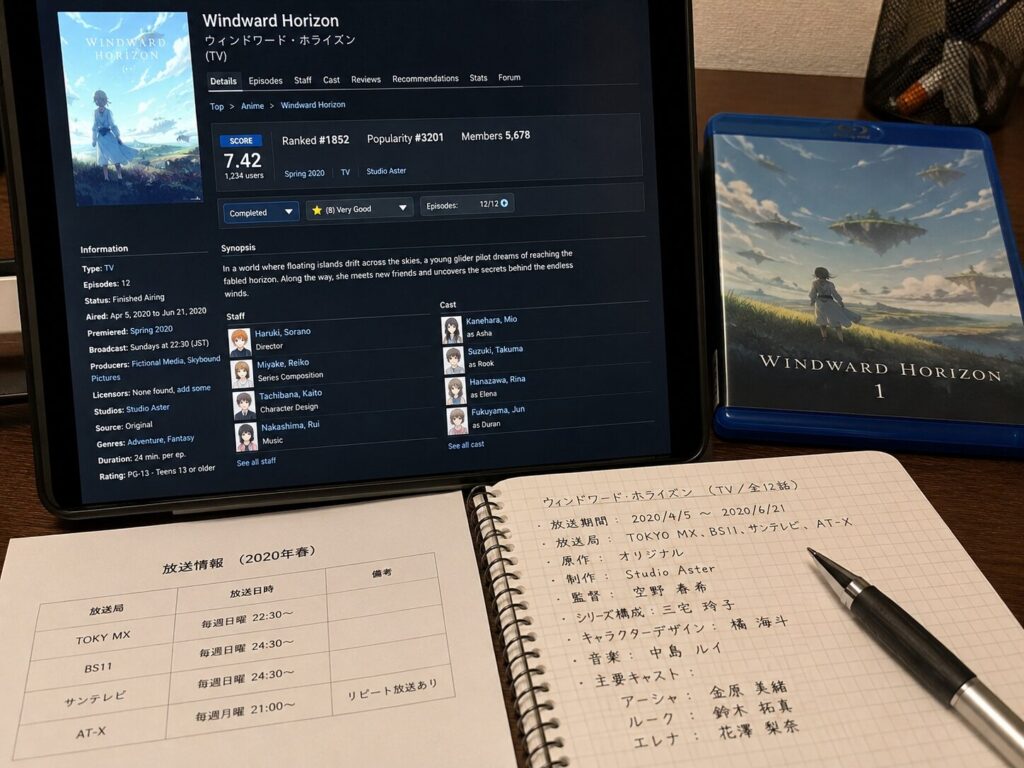
Use the credits shown in the anime itself
When the archived website is incomplete, the opening and ending credits of the original broadcast version are among the strongest records for staff and participating companies.
This distinction matters because credits can change between the television broadcast, streaming edit, recap version, and home-video release. A Media Arts Database research report explains that recording staff directly from the on-screen credits at the time of broadcast or release is considered especially reliable because editing and packaging can alter credit information later.
Record the exact role as displayed. Do not merge these different credits:
- Original creator or publisher
- Director
- Series composition
- Character design
- Animation production studio
- Production committee
- Broadcaster
- Music production
- Distributor
The animation studio is not necessarily the copyright owner, broadcaster, or company that controlled international distribution.
Use institutional and industry databases as structured references
Japan’s Media Arts Database covers animation television programs, video packages, and other formats. Its search structure includes information such as the date a work began broadcasting, screening, or sale, making it useful for identifying the work and locating production or release records.
Anime Taizen is a comprehensive Japanese anime database intended to preserve and connect historical information about the anime industry and culture. It is useful for checking titles, related works, episodes, and basic production information after a promotional website disappears.
Treat these databases as strong research tools, but not as automatic replacements for original credits. When a database conflicts with the screen credits, official booklet, or dated broadcaster notice, record the disagreement instead of silently choosing the most convenient result.
Reconstruct the Original Broadcast Timeline Separately
Production information and broadcast history should not be stored in the same field.
For a television anime, try to establish:
| Record | Information to capture |
|---|---|
| First Japanese broadcast | Station, region, date, and starting time |
| National or network expansion | Additional stations and their start dates |
| Episode schedule | Original date for each episode |
| Schedule changes | Delay, cancellation, double episode, or time-slot change |
| Rebroadcast | Station and date clearly labelled as a repeat |
| Streaming release | Platform, territory, and release time separate from television |
Start with archived “On Air” pages, broadcaster schedules, official press releases, and dated announcements from the production committee, publisher, or distributor.
Do not describe a platform’s “first aired” date as the original Japanese broadcast date without checking what it represents. It may instead be the date the episode entered that platform, became available in another country, or was uploaded after the television broadcast.
Regional stations may begin a series on different dates. Record the first confirmed station separately from later regional broadcasts rather than reducing everything to one unexplained date.
Resolve Conflicting Sources Without Guessing
When two sources disagree, identify what each source is actually documenting.
| Question | Strongest source | Supporting source |
|---|---|---|
| Who received a specific production credit? | On-screen credit from the relevant version | Official website archive, booklet, institutional database |
| What was the initial announced schedule? | Dated official announcement | Archived news article quoting the announcement |
| When did the first episode actually air? | Broadcaster schedule or contemporary broadcast record | Archived official site, dated trade report |
| Was a later date a rebroadcast? | Schedule explicitly marking a repeat | Program listing or broadcaster notice |
| When was the anime released in Korea? | Korean distributor, broadcaster, rating, or theatrical record | Korean OTT listing or contemporary press release |
| Which title is currently used on a Korean service? | Current official listing for that service | Importer or distributor announcement |
A database may list the planned premiere date, while a broadcaster record reflects a delayed actual transmission. A Blu-ray booklet may credit staff from a corrected home-video version, while the original television credits show a different role. Both can be valid when they describe different versions.
Record the source date, version, and scope instead of forcing one universal answer.
Keep Korean Release Information Separate From the Japanese Original
For Korean readers, local sources are useful for confirming:
- Official Korean title
- Korean distributor or importer
- Korean television or OTT release
- Subtitle or dubbing version
- Korean theatrical opening
- Local rating and release format
They should not normally be used as the sole proof of the original Japanese television schedule.
For anime films released in Korea, KOBIS can be searched by title, director, production year, opening date, country, format, and genre. KOBIS manages standardized film information and FIMS identifiers, while also warning that information gathered through different channels may contain discrepancies. It is therefore useful for documenting the Korean theatrical record, not for replacing the original Japanese production or broadcast record. kobis.or.kr
For television or streaming anime, use the current Korean importer, broadcaster, or licensed OTT page to document the Korean version. Clearly label that date as Korean broadcast, Korean streaming release, or Korean theatrical opening.
Create a Record That Separates Production, Japanese Broadcast, and Korean Release
A citation-ready record can use the following structure:
| Field | Example of what to record |
|---|---|
| Original title | Exact Japanese title |
| Work identity | TV season, film, OVA, special, and release year |
| Production credits | Role, person or company, and version inspected |
| Production committee | Exact name shown in credits |
| First Japanese broadcast | Station, region, date, and time |
| Later stations | Station-specific starting dates |
| Schedule revisions | Original plan and actual broadcast |
| Korean title | Title used by the relevant Korean distributor |
| Korean release | Broadcaster, OTT, or theatrical date |
| Evidence | URL, archived capture date, page, episode, or credit timestamp |
| Uncertainty | Conflicting or incomplete information that remains unresolved |
Save the archived URL, capture date, page title, and the date on which you accessed it. For video credits, note the episode, version, and approximate timestamp. For physical releases, record the edition, catalog number, and booklet page.
The most reliable workflow is:
Identify the exact work → recover the archived official pages → check the credits shown in the relevant version → reconstruct the broadcast schedule from dated records → document the Korean release separately → preserve every source with its date and scope.


